











A Pioneer in Promoting Sports
The YMCA’s triangular emblem symbolises the holistic development of moral, intellectual, and physical education. Physical education has always been a core part of our mission, rooted in the aspiration “to cultivate the capacity for self-reliance and self-supporting in Chinese youth”, as physical fitness is the fundamental prerequisite for such independence.
Before the Bridges Street Centre was built, our rented premises were equipped with billiard tables, table tennis, Go, and Chinese chess for our members. The establishment of the Bridges Street Centre not only provided the first auditorium for the local Chinese community, but it also featured Hong Kong’s first indoor heated swimming pool and an indoor elevated bowl-shaped running track. It offered the youth of that era the most cutting-edge sports facilities, fitness services, and opportunities to engage in Western recreational activities, aligning perfectly with the prevailing social ideology of “national strengthening through sports” (體育救國).

Basketball
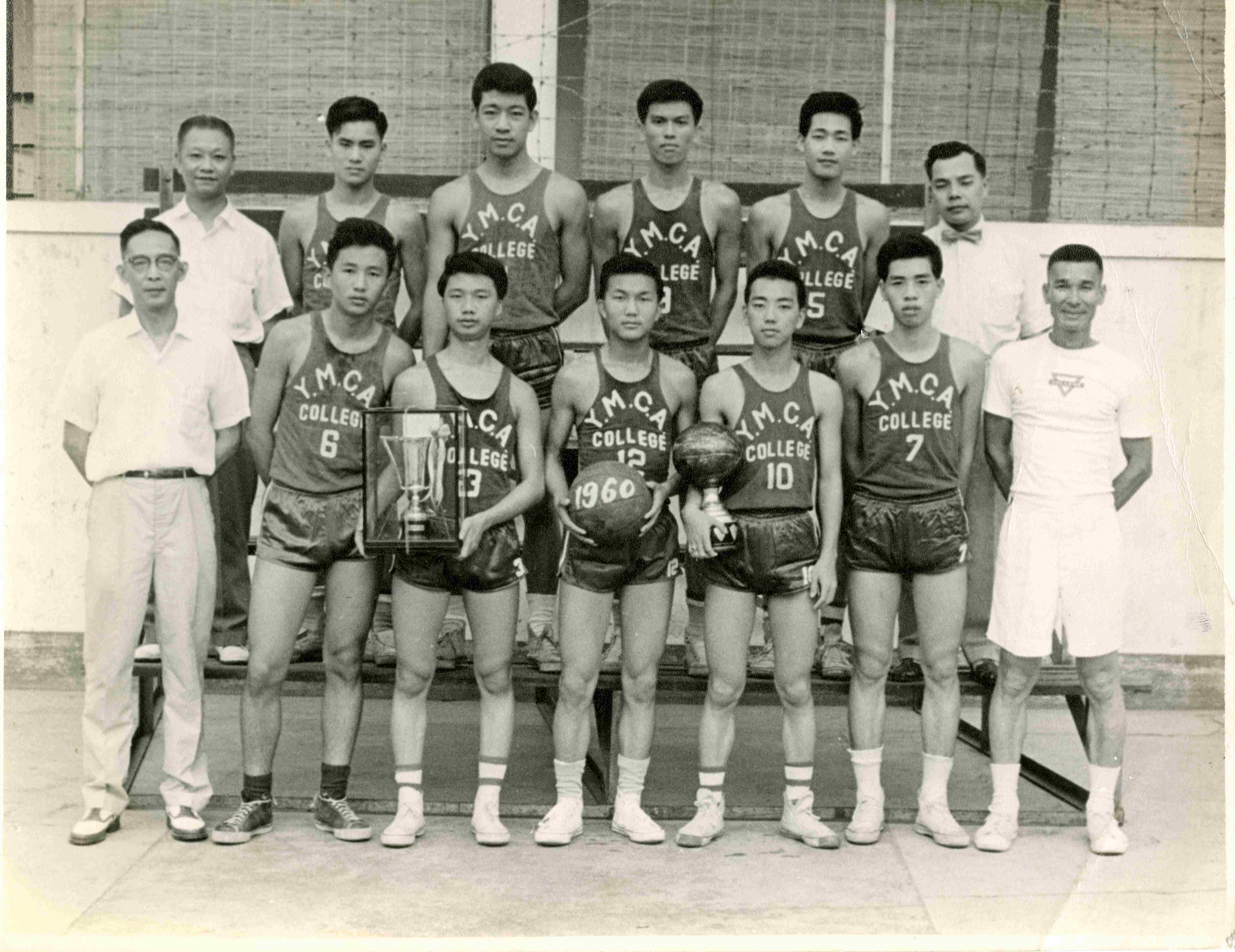
Chinese YMCA College Basketball Team, 1960
Development Milestones of YMCA
In 1920, we advocated setting up Hong Kong Federation of Basketball with the aim of promoting skills and interest in the sport. To popularise basketball in Hong Kong, we not only organised regular training classes, but our basketball teams also frequently participated in local competitions. We were even invited overseas for friendly matches to exchange skills, consistently achieved excellence.
Outstanding Achievements
- 1932: Bridges Street Centre hosted the first Hong Kong Open Women’s Basketball Competition
- 1950: Our Men’s Basketball Team won the championships in both the Open Basketball Tournament and the Hong Kong-Shanghai-Philippines Five-Team Basketball Tournament
- 1954: Our Women’s Basketball Team won the King’s Cup and the Elizabeth Youth Cup Basketball Tournament championships
- 1968: Five members of our Women’s Basketball Team were selected for the Hong Kong representative team to participate in the Asian Cup Basketball Competition
- 1976: Our Women’s Basketball Team won their fourth consecutive championship in the Hong Kong Women’s Basketball

Volleyball
In 1951, we initiated the establishment of the Hong Kong and Kowloon Volleyball Association (currently the Volleyball Association of Hong Kong, China).
In the early days of the interschool competition, volleyball matches were mostly held at the outdoor court next to the Bridges Street Centre.
Early Chinese Volleyball Teams
“Wo Lei Bo” (和利波) is the early phonetic translation of Volleyball. The sport was invented in 1895 by William G. Morgan, an American YMCA physical education director, who aimed to design an indoor game that was less physically demanding than basketball and suitable for people of all ages. Our “Wo Lei Bo Team,” formed in 1913, was one of the earliest Chinese volleyball teams in Hong Kong.
In the same year, our student hostel on Bridges Street was completed, offering various recreational and sports activities for students. The open-air court adjacent to the hostel became a popular venue for volleyball games. Volleyball was introduced as an official event in the First Far East Sports Meet in 1913, and we proudly sent our players to compete in the 1915 Games.

Swimming
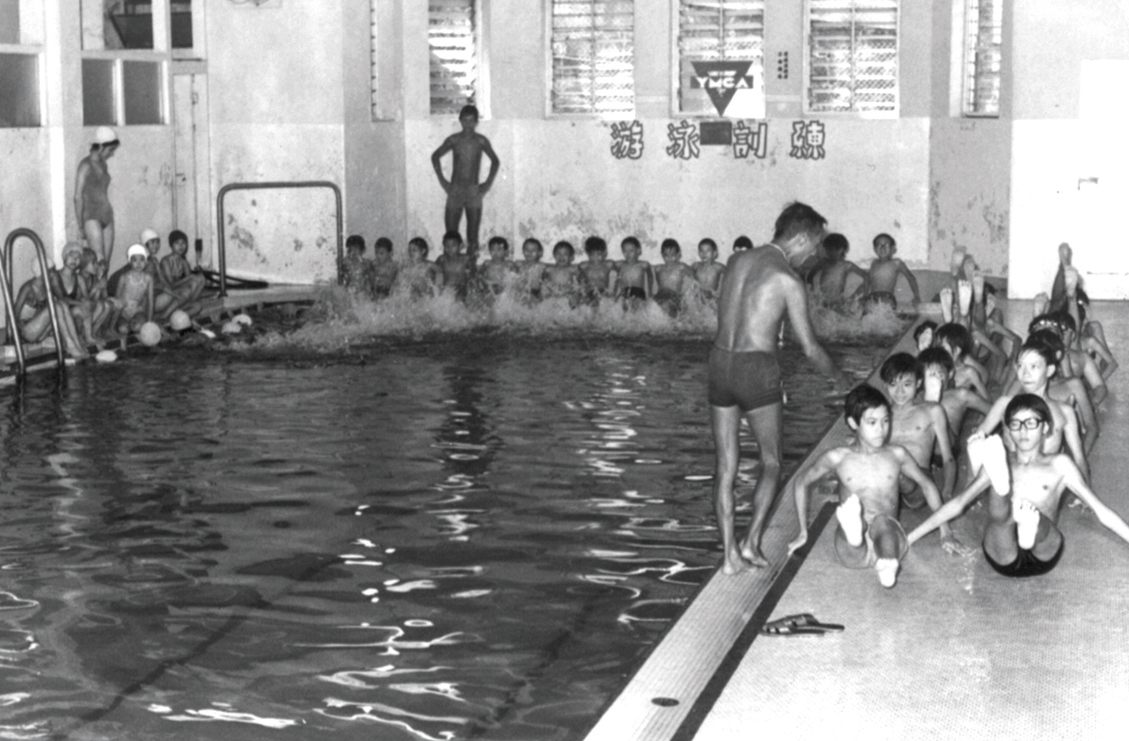
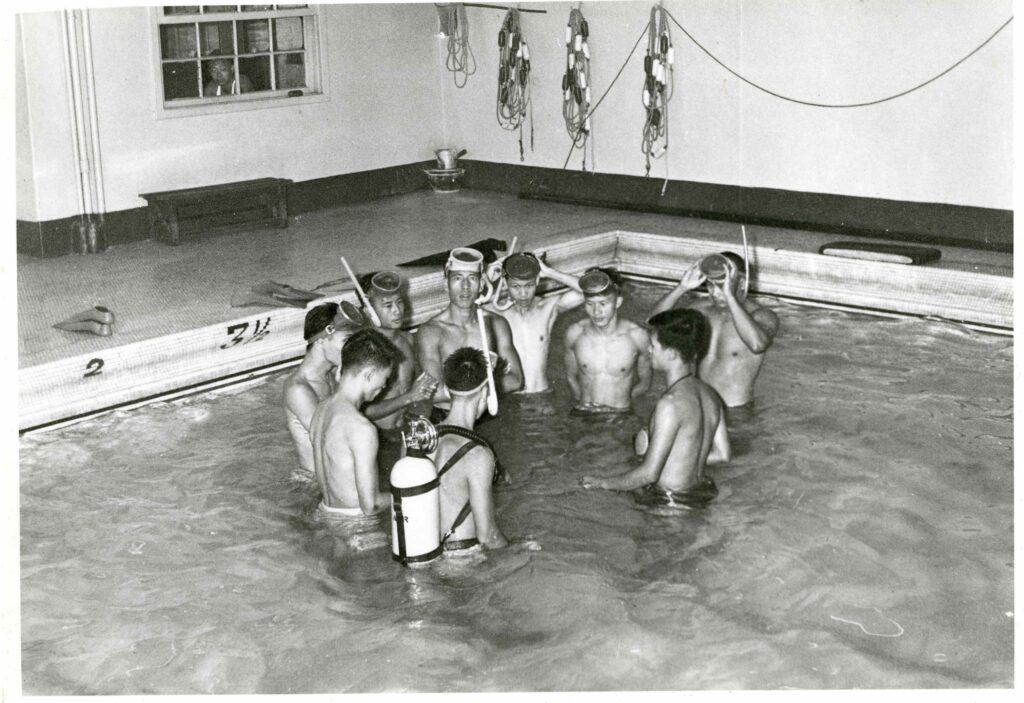
A swimming training class held at the indoor pool of the Bridges Street Centre in the 1960s.
The First Indoor Swimming Pool
In the pre-war era, swimming venues in Hong Kong were a rarity, and training was often hampered by the biting winter cold. Completed in 1918, the Bridges Street Centre (formerly known as the “Central Building”) housed Hong Kong’s first indoor swimming pool. This heated pool allowed for year-round practice, ensuring that swimming was no longer the exclusive privilege of a few Westerners and Chinese elites. Our first swimming team was formed in 1930, and the “Lai Tsun Swimming Team”(勵進團) came into being three years later to further hone our members’ swimming skills.” In 1954, we sent 12 swimmers to represesnt Hong Kong in the Far Eastern Olympic Games, underscoring our pioneering and pivotal role in professionalising the sport locally.
Renowned Swimmers Nurtured by YMCA
In our early years, YMCA swimming club nurtured a host of outstanding Chinese swimmers. Among them was female swimmer Ko Miu-ling, a renowned athlete in the 1940s who specialised in freestyle. Another famous swimmer was Chan Chun-nam, widely known in the swimming community for his long-distance freestyle and nicknamed “The Lung” (氣袋) for his exceptional stamina.

Taspony
The Story of Taspony in Hong Kong
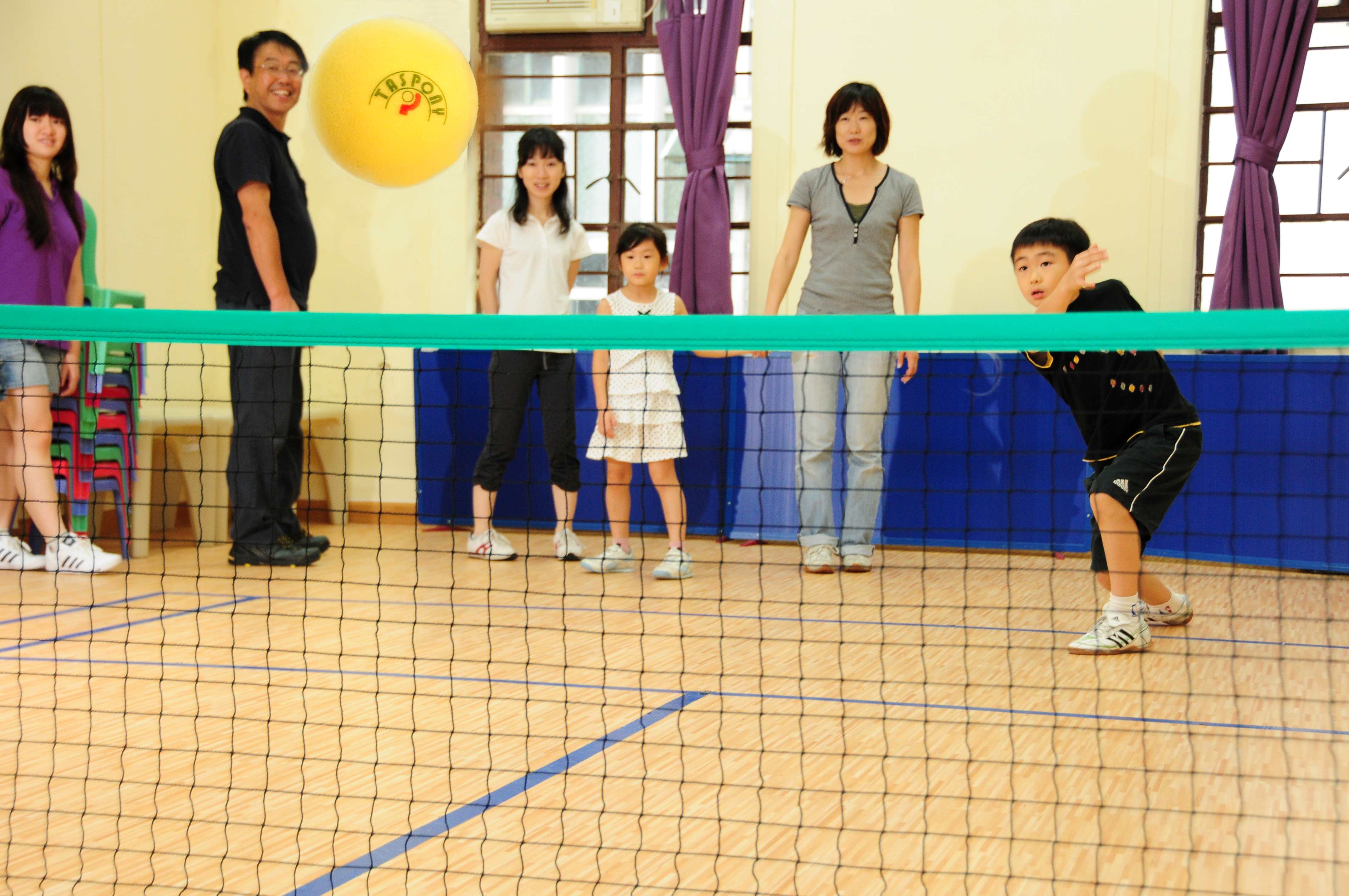
Taspony originated in Japan and was invented in 1981 by Mr. Eizo Yamaguchi, the staff member of Nagoya YMCA. We brought the sport to Hong Kong in 2009, officially naming it “Taspony” (手綿球) locally, and actively promoted it across schools, communities, and elderly services. In 2016, we launched and promoted “Soft Taspony,” which further lowered the physical demands of the sport. This adaptation allows individuals over 40, as well as those with weaker physical fitness or in rehabilitation, to participate safely and enjoyably.

Walking Football
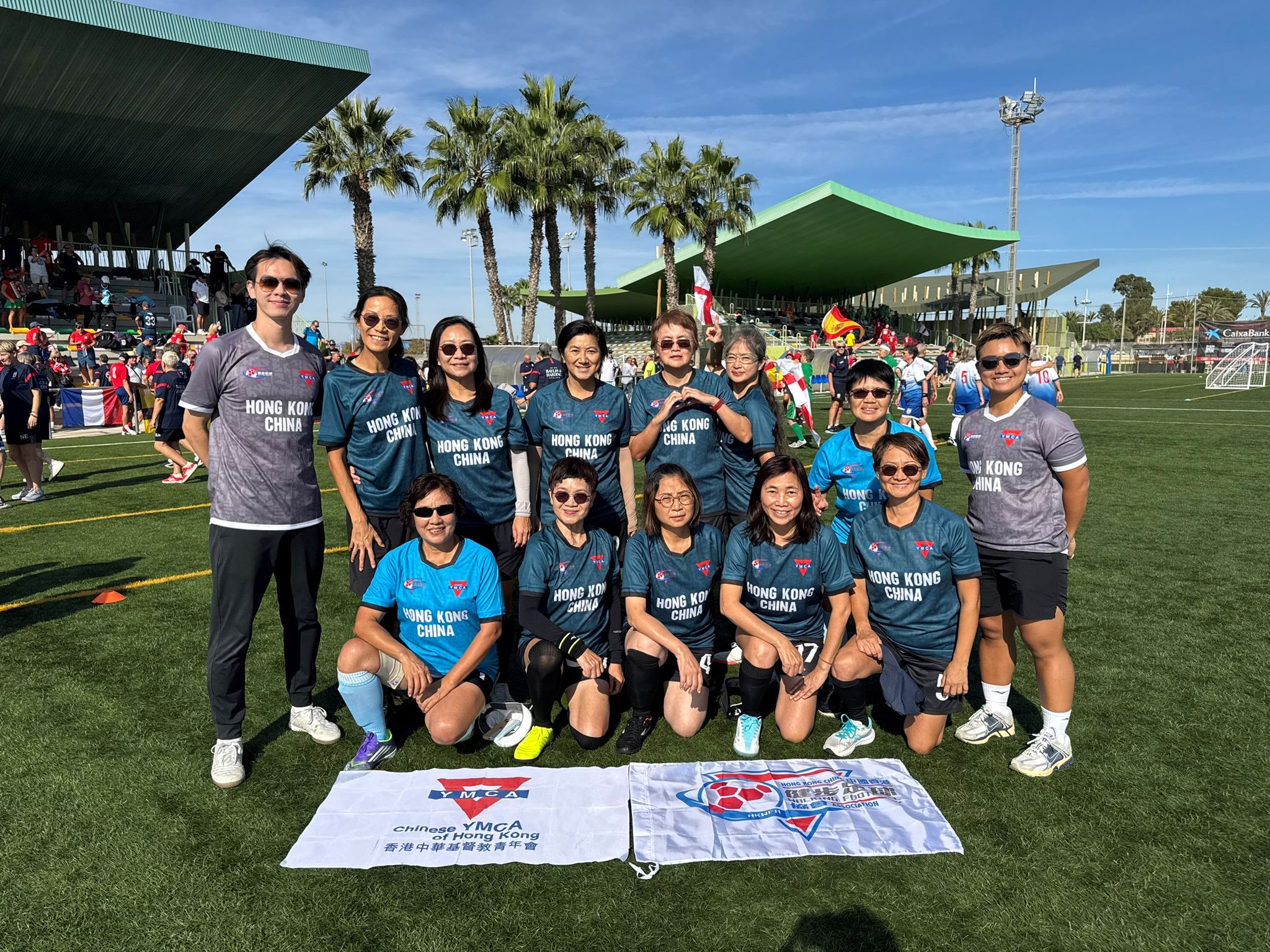
Our Walking Football Team participated in the biennial Walking Football World Cup in Spain.
A Pioneer in Promoting Walking Football in Hong Kong
Walking Football is an emerging sport specially designed for the golden-aged. It was first introduced to Hong Kong from the United Kingdom in 2015 by us, and is also suitable for people undergoing rehabilitation, such as those recovering from Parkinson’s disease, cancer, or heart disease.
A longitudinal study conducted by The Education University of Hong Kong revealed that Walking Football has a significantly positive impact on the physical and mental well-being of the golden-aged and those in rehabilitation. Just eight weeks of training can effectively improve cardiopulmonary function, lower limb muscle strength, and psychological resilience. Long-term participation also helps expand social circles and alleviate depressive symptoms.
Building on this success, we established the Hong Kong China Walking Football Association in 2022, dedicating ourselves to promoting the sport across Hong Kong and the Greater Bay Area.